Summarize this text with AI
Select your preferred tool to create a short summary of the text.
Scalable Logistics for Small Businesses: Can Your Warehouse Keep Up As Your Sales Grow?
Although growing in e-commerce often seems like an exciting process, the operational side of the business can become complex faster than you think. With the first orders, it is possible to manage everything manually. However, as the number of orders increases, packaging processes start to take longer, inventory tracking becomes difficult, and operational errors begin to show. Especially during campaign periods or unexpected sales spikes, warehouse capacity can fall short.
Today, many brands struggle on the operations side while trying to manage sales growth. Because a growing business volume doesn't just mean selling more products; it also means more packaging, more inventory movement, more customer expectations, and more intense logistics operations. This is precisely why having an operation that can scale flexibly is of great importance.
Especially businesses that properly plan their e-commerce warehouse management processes move forward much more control-led during growth periods. Additionally, brands that manage their operational load correctly succeed in preserving the customer experience. Today, competition is shaped not only by product quality but also by how quickly and seamlessly the order arrives. For this reason, making the logistics side growth-friendly is now becoming critical even for small businesses.
What does scalable logistics mean?

For a business, having a scalable logistics operation means that when sales volume increases, the system can continue to grow without completely falling apart. In other words, when the number of orders doubles, the operation must be able to proceed with the same speed and quality.
Sudden spikes in demand occur quite frequently, especially in e-commerce. Campaign periods, influencer collaborations, viral products, or seasonal peaks can raise order volume significantly in a short time. If the logistics infrastructure is not prepared for this, operational problems become inevitable.
At this point, a scalable logistics approach provides a great advantage for businesses. Because the goal here is not only to manage today's order volume but also to be ready for growth scenarios that may arise in the future.
In scalable systems, operational processes proceed more flexibly. Storage space can expand when needed, order management is supported by automation, and inventory movements are tracked more closely. Thus, sales growth can be managed without turning into an operational crisis.
How to Recognize a Warehouse That Cannnot Scale?
Many businesses usually start noticing problems on the operations side when sales increase. Details that seem like minor problems at first can turn into a serious operational burden over time.
Some signs indicating that a warehouse structure cannot scale include:
Prolonged order preparation times
Increased error rates in packaging processes
Inconsistent inventory counts
Delayed shipping during peak periods
Operations team constantly working overtime
Uncontrollable return processes
Space problems with new product entry
These problems surface more quickly, especially in systems that run manually. As order volume grows, small operational problems begin to affect the entire process in a chain reaction. Therefore, it is very important for growing businesses to evaluate their logistics infrastructure early on.
How does warehouse management change when demand increases?
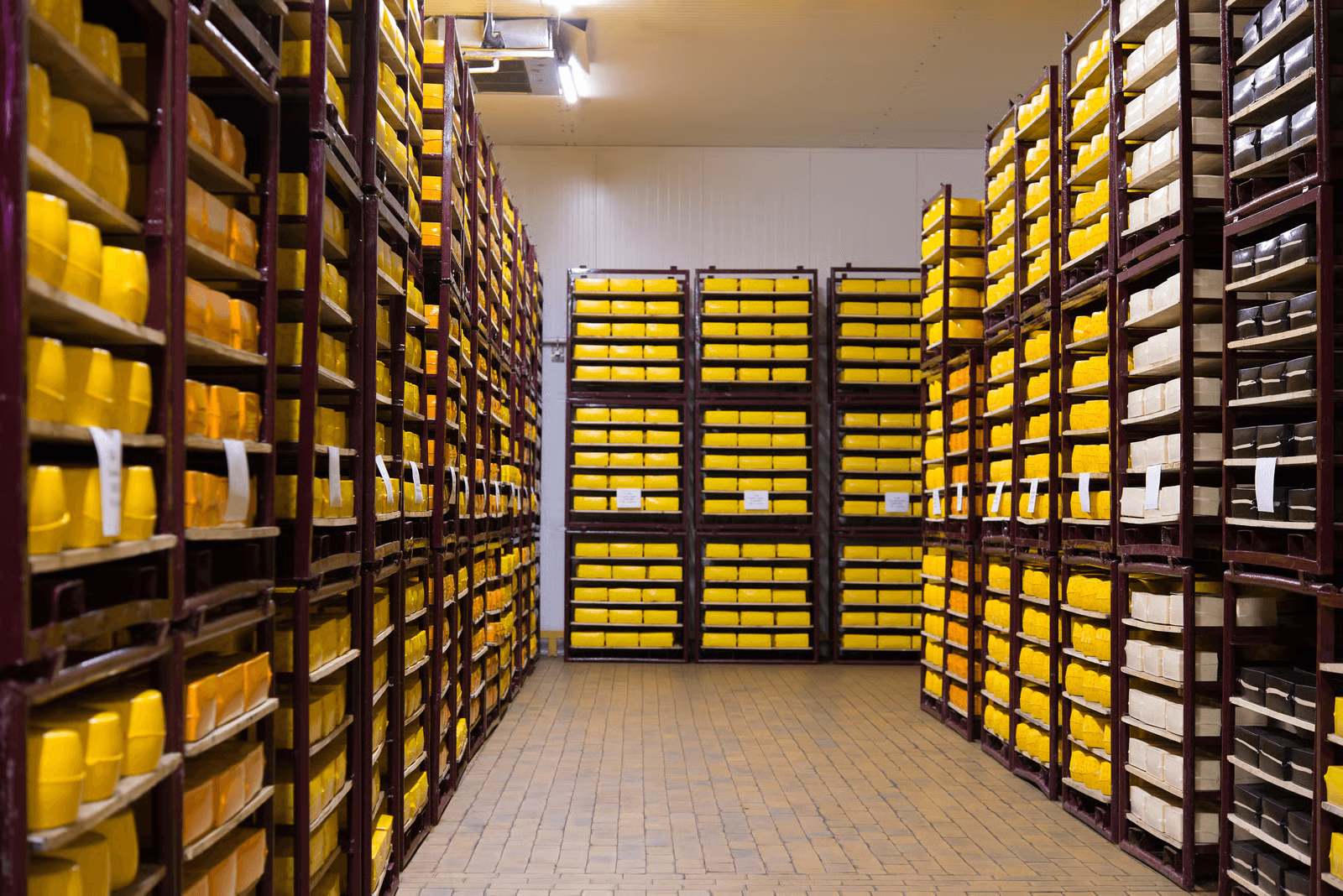
When sales volume increases, the way the warehouse operation works starts to change completely. A process that was initially managed with a few shelves eventually requires more professional systems. Because as product diversity increases, inventory movements also get complex.
Warehouse management becomes much more critical, especially during busy campaign periods. While preparing hundreds of orders simultaneously, problems like shipping incorrect items, incomplete packaging, or delayed dispatch can occur. This situation directlty affects not only the operation but also customer satisfaction.
With the increase in demand, the following processes become more important:
Real-time inventory tracking
Using barcode systems
Order prioritization
Packaging standardization
Returns management
Operations team planning
Warehouse space optimization
If the operational side continues to run manually, particularly in fast-growing businesses, the process can become unmanageable. Therefore, the warehouse operation needs to adapt to the pace of growth.
Advantages of flexible warehouse solutions

Warehouses operating with fixed capacity can start to slow down a business after a certain point. Especially for brands with seasonal sales, the space required is not the same throughout the year. While more inventory space is needed in some periods, capacity can decrease in others.
Flexible warehouse solutions provide a major advantage here. Because the business can use only the operational capacity it needs. Thus, unnecessary fixed cost burdens do not arise.
Among the prominent advantages of flexible systems are:
Quick adaptation to demand increases
Keeping operational costs under control
No need for additional warehouse investment
Speeding up packaging processes
More controlled inventory management
Creating a scalable operations infrastructure
Especially for small businesses, being able to grow without entering into high fixed investment costs creates a significant advantage. Because warehouse investment does not just consist of renting space; staffing, equipment, software, and operations management also incur additional costs.
Logistics mistakes made by growing businesses

When sales start to grow, many businesses focus solely on the product and marketing side. However, if operational processes do not develop at the same pace, growth can cease to be sustainable.
One of the most common mistakes is trying to manage the operation manually for too long. Systems that worked initially can prove insufficient when sales volume grows.
Other common logistics mistakes include:
Planning warehouse capacity too late
Running inventory tracking manually
Not organizing return processes
Making shipping operations dependent on a single person
Running campaigns without anticipating order volume
Not standardizing packaging processes
Especially when the operational side grows unplanned, the workload on the team increases significantly. While this raises the error rate, it also negatively impacts the customer experience.
Why Do Operations Collapse When Sales Increase?
For many businesses, the breaking point of the operation is usually during rapid growth periods. Because the existing system operates based on a specific capacity; when order volume exceeds this, processes start to disrupt one another.
For instance, when a setup managing 20 orders a day quickly goes up to 300 orders, it becomes extremely difficult to continue with the same operational model. Packaging cannot keep up, inventory updates are delayed, and customer support queries increase.
The main problem here is usually that the system is not designed map to growth. Especially when operations are not supported by automation, the team's workload increases exponentially. Therefore, it is of great importance for growing businesses to professionalize their operations early on.
When should fulfillment be used?
Many businesses can be too late to switch to a fulfillment service. However, when the operational load reaches a certain level, managing the process with outsourcing support can make things much easier.
Fulfillment systems offer significant advantages, especially when daily order volume starts to increase steadily. Because here, not only storage but also packaging, order preparation, inventory management, and operational organization proceed in a professional manner.
There are some signs that indicate it has come time to switch to a fulfillment system:
Struggling to keep up with order fulfillment
Space shortage arising in the warehouse
Inability to keep operational costs under control
Return processes becoming complicated
A constant need to expand the operations team
Packaging processes consuming too much time
At this point, operation-focused solutions like ParkPalet can help ease the logistics burden of businesses. Providing operational flexibility, especially during growth periods, is crucial for the sustainability of the business.
Is expanding the warehouse enough?
When operations get tight, many businesses think of renting a larger warehouse as the first solution. However, expanding space alone often does not solve the problem. Because as long as operational inefficiency continues, a larger space can only create larger chaos.
What actually matters is process management. If the inventory flow is not proceeding correctly, the order preparation system is not organized, or team management is inefficient, operational problems persist even if the warehouse grows.
Therefore, during growth periods, it is necessary to develop not only physical capacity but also the operational model itself.
Why do inventory errors occur?
One of the most common operational problems in e-commerce is inventory errors. Especially in manually tracked systems, product inflows and outflows can get mixed up over time.
The most common causes of inventory errors include:
Manual data entry
Outdated inventory systems
Lack of barcode infrastructure
Lack of control during busy periods
Incorrect processing of returned products
Unplanned warehouse layout
This type of problem affects not only the operation but also sales performance. Because showing an out-of-stock product as available for sale directly decreases customer satisfaction.
Does logistics affect sales?
Today, customers do not just look at product quality. How quickly the order arrives, packaging quality, and the delivery experience also heavily influence purchase decisions.
Delayed orders or incorrect shipments, in particular, can lead to customer loss. Besides, poor operational processes negatively affect brand perception as well.
One of the most important factors increasing repeat purchase rates in e-commerce is a seamless delivery experience. Therefore, logistics processes are no longer just operations; they are now directly part of sales performance.
How is operation optimized?
For growing businesses, operations optimization does not only mean reducing costs. It also means building a faster, more controlled, and sustainable structure.
Businesses that appropriately plan their e-commerce operations management processes, in particular, move forward much more easily during growth periods. To optimize operations, focusing on the following areas becomes important:
Digitalizing inventory tracking
Standardizing order processes
Speeding up packaging operations
Systematizing return processes
Managing operational capacity flexibly
Planning for demand increases in advance
Professional management of operational processes, especially for fast-growing brands, directly strengthens customer experience.
To keep your warehouse costs under control and increase operational efficiency as your business grows, you can benefit from ParkPalet's fulfillment operations solutions. Additionally, with Navlungo, you can securely deliver your products to different points worldwide, making your global shipping processes more sustainable. Especially for businesses wanting to avoid Amazon's high storage costs as sales volume grows, 3rd party operational solutions can offer a significant advantage.
While your business is growing, ParkPalet is by your side to flex your warehouse costs and increase efficiency.