Summarize this text with AI
Select your preferred tool to create a short summary of the text.
What Are the Hidden Costs Source of Storage?
Storage costs seem straightforward for most brands. The square-meter rate, pallet fee, rent, or contract amount is clear. Because of this, many managers operate under the assumption that "we know our warehouse costs." In reality, however, the warehouse is one of the operational areas that generates the most hidden costs. These costs do not appear as a single line item on invoices; they are scattered throughout processes, become normalized over time, and quietly drag down profitability.
In recent years, especially with growing e-commerce and manufacturer brands, the following awareness has begun to emerge:
“The problem is not the warehouse invoice, but how the warehouse works.”
In this article, we discuss where storage-related hidden costs arise and why they are often noticed too late.
Warehouse Space is More Expensive Than It Looks
Warehouse costs are generally calculated based on the space used. However, a critical detail is overlooked here: inefficiently used space is also a cost. Non-rotating inventory, misplaced products, or seasonally bloated stock silently occupy space in the warehouse. While this area becomes unusable for other products, it generates no value for the brand.
This situation is particularly evident in single-location warehouses. Because when all inventory is gathered in a single center, fast-moving products and slow-moving ones share the same space. As a result, the warehouse looks full, but there is no movement proportional to sales.
At this point, the hidden cost reveals itself in:
Stock that does not generate sales occupies space
As the space fills up, the operation slows down
The need for additional space arises for new products
And this chain increases the warehouse cost without being noticed.
Labor: The Least Measured, Most Costly Item in the Warehouse
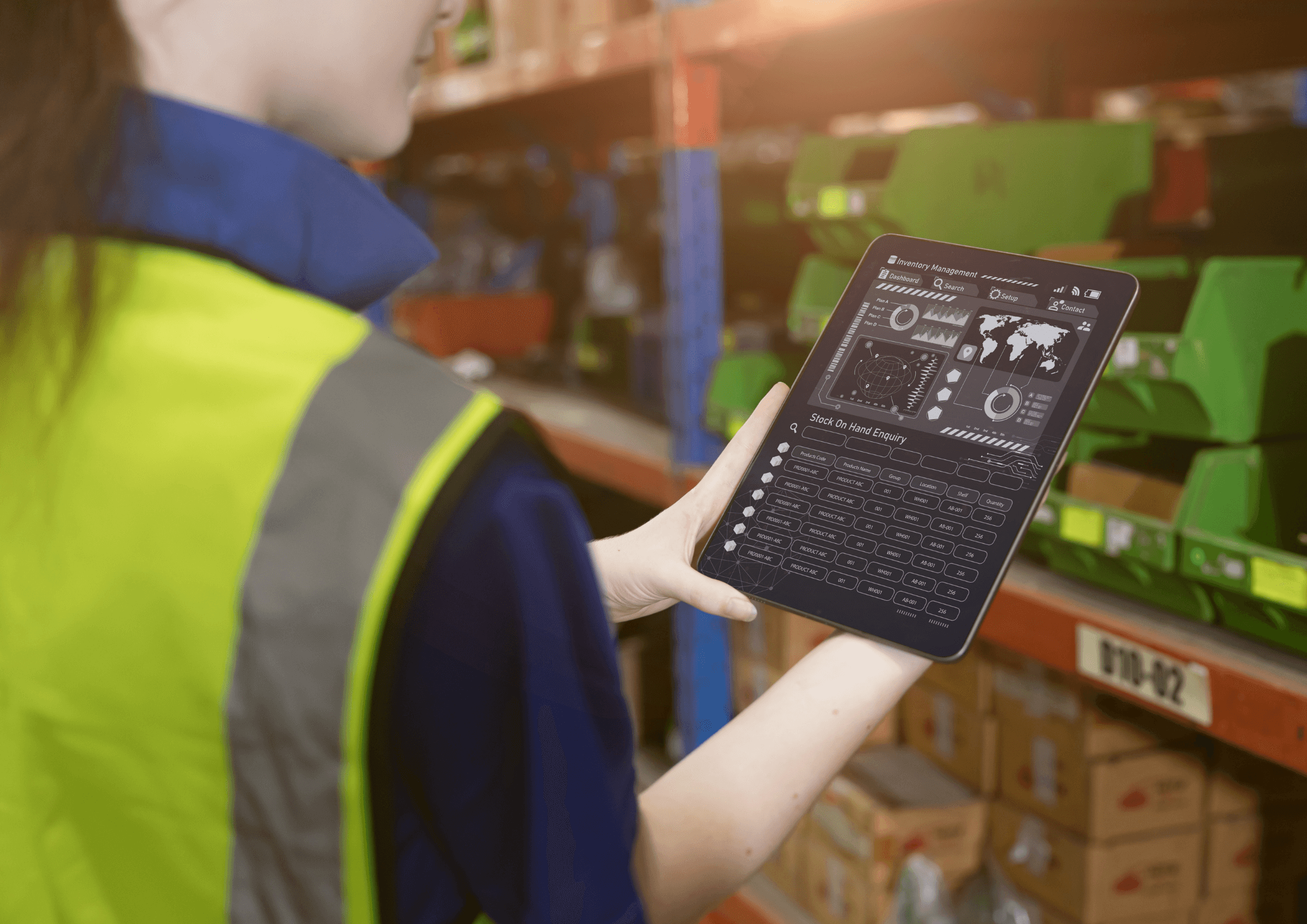
Labor cost in warehouse operations is often accepted as a "must-have" expense. However, the problem is not the existence of labor, but how it is used. In poorly designed warehouse workflows, staff spend most of their time on movements that do not generate value.
Long group picking distances, unclear workflows, and frequently changing priorities make labor inefficient. This does not directly reflect on the payroll, but creates an indirect cost by extending order preparation times.
The hidden cost is usually buried in:
Too many touchpoints for the same order
Intertwining of packaging and picking processes
Returned products slowing down the main operation
These losses seem small, but as volume increases, they turn into a serious cost item.
Inventory Errors: The Element That Silently Erodes Profitability

When inventory accuracy is compromised, its invoice is not only billed as "incorrect inventory". Inventory errors lead to incorrect shipments, canceled orders, and increased return rates. Each link in this chain pushes the storage cost a little higher.
Especially if the integration between the warehouse and sales channels is weak, inventory information lags behind. This causes physically existing products in the warehouse not to appear in the system, or vice versa. As a result, the operation proceeds with assumptions rather than actual inventory.
At this point, the hidden cost grows through:
Repackaging
Two-way shipping
Return acceptance and control processes
Compensation costs due to customer dissatisfaction
Return Operation: The Invisible Multiplier of Warehouse Costs
As the return rate increases, storage costs also increase, but this relationship is often not clearly seen. Because returns are treated as a separate operation. However, each returned product enters the warehouse for a second time and is processed again.
This second cycle increases in-warehouse space utilization, occupies labor, and slows down the main fulfillment operation. If the return process is not clearly designed, an almost parallel operation starts inside the warehouse. This produces an invisible but continuous cost.
Hidden costs from returns are usually manifested as:
Products that cannot be restocked
Late processed returns
Return areas narrowing down the main warehouse
and show up in this way.
The Price of a Single Location: Distance and Time

Storage costs do not consist only of in-warehouse processes. The distance between the product and the customer is also part of this cost. In single-location warehouses, shipments made to distant regions both increase shipping costs and prolong delivery times.
This situation affects not only logistics expenses but also sales performance. Late deliveries reduce customer satisfaction and trigger returns. Thus, a decision originating from the warehouse gives rise to different cost items in a chain reaction.
ParkPalet Approach: Making Hidden Costs Visible
ParkPalet handles storage not only on a space basis but also on operational efficiency. The goal is to be able to associate every square meter and every work step in the warehouse with sales. Thanks to the multi-location structure, integrated fulfillment, and return processes, hidden costs are kept under control.
The warehouse ceases to be a cost-generating necessity and becomes a measurable, optimizable operation.
Conclusion: If the Warehouse is Silently Losing Money, It is Hard to Notice
Storage-related hidden costs may seem small when looked at individually. However, when these costs combine, they seriously drag profitability down. Winning brands will be those that address the warehouse not only with the question of "where we keep it", but how we run it.
🚀 CTA – ParkPalet Storage & Fulfillment Solutions
If you want to see what your warehouse operation really costs:
👉 Examine ParkPalet Storage and Fulfillment Solutions
👉 Let's Analyze Your Warehouse Operation
Let's not guess hidden costs, let's measure and manage them.